
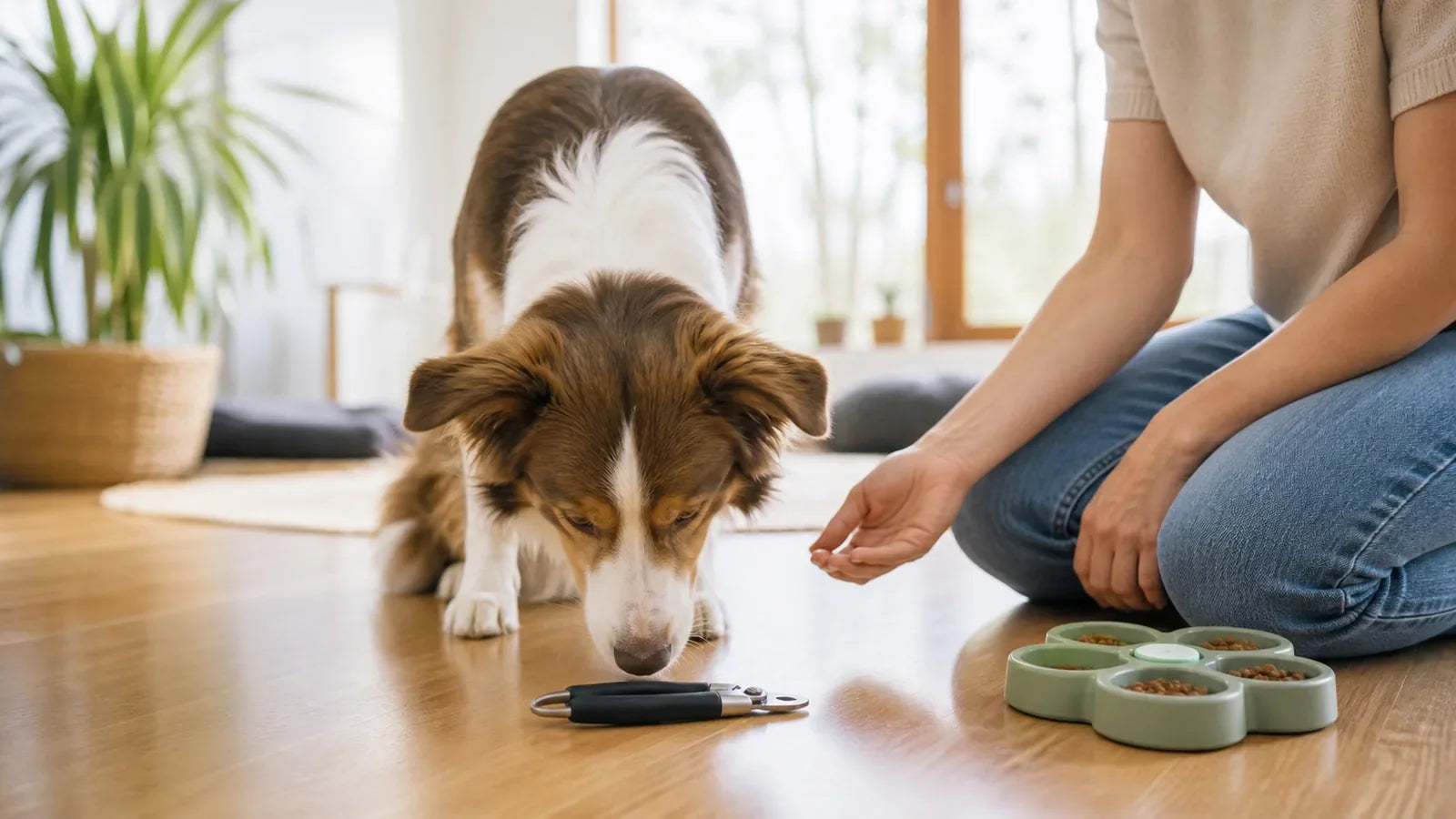
A full nail trim may be too much for one session. Desensitization separates the process into tiny experiences and pairs each one with something your dog already enjoys.
Create a predictable starting point
Prepare the environment before inviting your dog into the activity. Familiar cues, comfortable spacing and a clear finish make the experience easier to understand.
- Begin with the clippers resting on the floor at a comfortable distance.
- Reward a glance or sniff without moving the tool toward the dog.
- On another day, practice a one-second paw touch without clipping.
- Increase only one detail at a time and stop before your dog pulls away.
Keep expectations flexible
Food enrichment can occupy a relaxed dog, but it should not distract a frightened dog through a procedure. Ask a groomer or veterinarian for hands-on guidance when needed.
Build a clear starting point
At the heart of Nail Trim Desensitization: Tiny Steps That Build Comfort is a straightforward goal: break nail-care practice into short, low-pressure steps your dog can understand. A useful low-pressure care and enrichment session should be easy for your pet to understand and realistic for you to repeat. Before you begin, decide what a small success will look like. It might be thirty seconds of calm investigation, one comfortable handling step, or a short search that ends before interest fades. A modest target makes it easier to protect confidence and notice meaningful progress.
Choose a quiet nonslip area, prepare every tool before inviting your dog over, and keep the first repetition shorter than you think it needs to be. Prepare the full environment first so you are not leaving your pet mid-session to find a towel, spoon, gate or cleaning brush. Keep other animals and household traffic out of the area when they could add pressure. If food is involved, reserve the portion from a normal meal whenever possible. This keeps the activity focused on experience and pacing rather than simply increasing calories.
Turn the idea into a repeatable routine
- Start with familiar information. Let your pet see and smell the setup without pressure to interact. Familiar food, a known mat or a usual cue can make the first seconds easier to read.
- Offer the simplest version. For this topic, increase distance from the care tool and reward calm observation. Easy is not a wasted level; it tells your pet how the activity works and gives you a clean baseline.
- Stay close and observe. Look for loose posture, voluntary re-engagement and steady movement. Fast, frantic action is not automatically better engagement.
- Change one detail at a time. When the easy version is consistently comfortable, you can add only one small handling step after several relaxed repetitions. Changing several variables at once makes it difficult to know what helped.
- Finish and reset. Use a consistent ending, pick up food-contact equipment, clean the area and allow quiet rest. A clear finish prevents access turning into chewing or competition.
Keep the challenge fair
The most common mistake is making the activity harder because it looks too easy to a person. Pets do not need constant novelty or maximum duration to benefit. Another mistake is using a very large food portion to hold attention. Texture, placement and scent can extend an activity without adding more. Finally, avoid treating refusal as stubbornness. Walking away, freezing, scratching at the setup, vocalizing or switching from licking to forceful chewing can all mean that the task, environment or timing needs to change.
- Do not introduce the activity when your pet is already highly aroused or exhausted.
- Do not leave food-contact or chewable materials available after the supervised session.
- Do not compare speed or enthusiasm between pets; comfortable engagement looks different for each individual.
Use behavior as your progress report
Progress is best measured through quality, not minutes. Notice whether your pet approaches willingly, maintains a comfortable body position and can disengage without distress. A short session with relaxed behavior is more useful than a long session filled with repeated frustration. Keep a brief note about the location, food or materials used, approximate duration and the moment you decided to stop. After several sessions, those notes reveal patterns that memory often misses.
Choice matters during handling. Pause when you see stiffness, avoidance or a change in breathing, and seek qualified help when fear, pain or distress persists. If a previously comfortable routine suddenly becomes difficult, consider changes in the environment as well as changes in your pet. Noise, a slippery surface, another animal nearby or a different food texture may explain the response. Sudden pain, appetite loss, weakness or marked behavior change deserves veterinary attention rather than another enrichment adjustment.
Frequently asked questions
How long should a session last?
There is no universal target. Begin with a few successful minutes or less, especially for a new setup. End while your pet is still comfortable, then use the next session to decide whether a small increase makes sense.
How often should I repeat it?
Repeat familiar activities often enough that the rules stay clear, but rotate the details when interest fades. Daily use can suit some simple feeding routines; more demanding training or care practice may work better in very short sessions several times a week.
When should I stop?
Stop if the equipment is damaged, food becomes unsafe, your pet tries to swallow non-food material, or body language shifts toward fear or escalating frustration. Calmly remove the setup, reset the environment and return later with an easier version.